Table Of Content
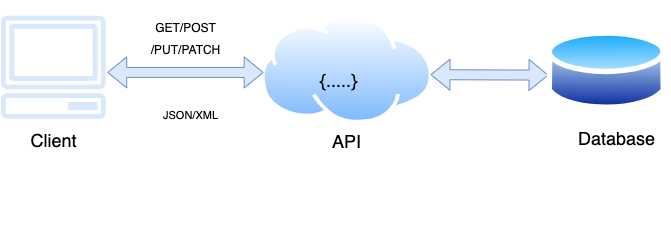
They can use the current version and migrate on their own when the new version is stable. The big advantage is that we can work on new features or improvements on a new version while the clients are still using the current version and are not affected by breaking changes. Our job will require us to design and implement an API for that application.
Utilizing Query Parameters
In the grand symphony of web development, the naming conventions of REST API endpoints play a fundamental role. We’ve also delved into the importance of formatting, style conventions, and the utilization of query parameters. Above all, we’ve learned that consistency, clarity, and simplicity are the guiding principles that can make the user’s journey through the labyrinth of REST APIs a breeze. By adhering to REST API naming conventions, you can significantly enhance the effectiveness of Moesif’s data collection and analysis.
12 API security best practices to protect your business - TechTarget
12 API security best practices to protect your business.
Posted: Tue, 18 Oct 2022 07:00:00 GMT [source]
Accept and respond with JSON
The easiest way to get consistency is to just use HTTP without adornment or invention. Where HTTP does not provide answers (this is less common than many people think), try to pick one solution and stick with it. Endpoint is not an HTTP concept, but it is fine if all your well-known URLs (and even all the dynamically-allocated ones) begin with the prefix me.com/api.

API documentation tools
Involve anyone who understands how an API will be used in discussions as you design the API. Moving from the legacy Swagger description format of OpenAPI 2.0 to 3.0 brought many changes. While OpenAPI 3.1 may be a minor release, there are some significant differences between version 3.1 and 3.0. The two major versions of OpenAPI have the most significant differences, which come from their history. OpenAPI 2.0 was previously known as Swagger and is intended to replace it with backward compatibility. Once adopted as an open format, the community began working on OpenAPI 3.0, released in 2017.
Error!
One workout consists of an id, name, mode, equipment, exercises, createdAt, updatedAt, and trainerTips. At the moment nothing should have changed inside our responses. But under the hood our controller layer talks now with our service layer. Because of its standardization, API's should accept and respond with data in JSON format.
Additional Resources
A simple string manipulation might look for the third line, strip out the XML and put it into a Firstname variable, then look at the fourth, do the same and put it into Lastname variable. When the other application introduces a MiddleName field, the application will not error; instead it will report the LastName as the middle name. The API is a public API, JSONPlaceholder, so the code works natively in most modern versions of Python. On a Mac or Linux system, you can save this as a text file called "get.py" and then run pything get.py from the command line to see it execute. Versioning is usually done with /v1/, /v2/, etc. added at the start of the API path. If you are using caching, you should also include Cache-Control information in your headers.
This strategy enables consumers and producers to collaborate on API definitions before the implementations are built out, which improves both the quality and usability of APIs. Once you have a firm grasp on creating and managing API routes within Next.js, the next step is to integrate these routes with other services and APIs. This could include connecting to databases, interfacing with external APIs, and securely managing configuration through environment variables. These integrations expand the functionality of your API routes, allowing them to serve as robust backends for your applications. In this example, the handler function checks if an ID is provided and simulates a user data fetch. If no ID is provided, it throws an error, which is caught in the catch block, and an appropriate error message is sent back with a status code of 400.
Filtering, sorting, and pagination are all actions that can be performed on the collection of a REST API. This lets it only retrieve, sort, and arrange the necessary data into pages so the server doesn’t get too occupied with requests. You can think of the data of your API as a collection of different resources from your consumers. This should look very familiar if you've already worked with API's that have OpenAPI documentation. This is the view where all our endpoints will be listed and you can extend each one to get more information about it.
Design to code
As we stated before JSON is a subset of JavaScript, which gives it a more advantage over XML because it fits seamlessly into JavaScript code. If we pass the same amount of information, JSON is faster to transmit and process the information because JSON is always smaller. Let’s dive then into the best practices in other to be able to create this smooth communication between the two systems.
Now we should be ready to create a basic setup for our API. We won't overcomplicate things, and we'll build a simple but organized project structure. The third layer is the Data Access Layer where we'll be working with our Database.
This is basically the difference between using a client-side SDK (Software Development Kit) and a raw cURL command line request. Most of the client-side programming environments supply such SDKs as built-in libraries or packages. JavaScript fetch() API does it, although it needs a fair amount of “setup” for a call. There are several commercial offerings that package or replace the fetch call to make life easier for the developer. See, for example, 10 Best JavaScript HTTP Request Libraries.
We also need ways to paginate data so that we only return a few results at a time. We don't want to tie up resources for too long by trying to get all the requested data at once. To design an API, you must first have a clear understanding of the API's intended use case.
There’s no rule on keeping the resource nouns singular or plural, though it is advisable to keep collections plural. Having the same plurality across all resources and collections respectively for consistency is good practice. Coming back to the photosharing app, say it has a public API with /users and /photos as collections.
Filtering, as the name already says, is useful because it allows us to get specific data out of our whole collection. Now we're able to throw and catch errors in the service and data access layer. We can move into our workout controller now, catch the errors there as well, and respond accordingly. That's the reason why it's always a good practice to return proper HTTP error codes for different cases. This helps the consumer or the engineer who built the API to identify the problem more easily.
Middlewares are functions that run before your route handlers and can modify the incoming requests or outgoing responses. They are useful for code that needs to run repeatedly across multiple routes, such as authentication checks, logging, or setting response headers. As you grow more comfortable with basic API routes in Next.js, you can begin to explore more advanced routing techniques. These include setting up dynamic API routes, utilizing middleware for more complex processing, and effectively handling errors. These strategies enhance the functionality and reliability of your API endpoints. Filtering mechanisms can utilize a range of criteria, from date ranges to price ranges, depending on what is required by the API’s functionality.




No comments:
Post a Comment